





 All Categories


 Home
Home
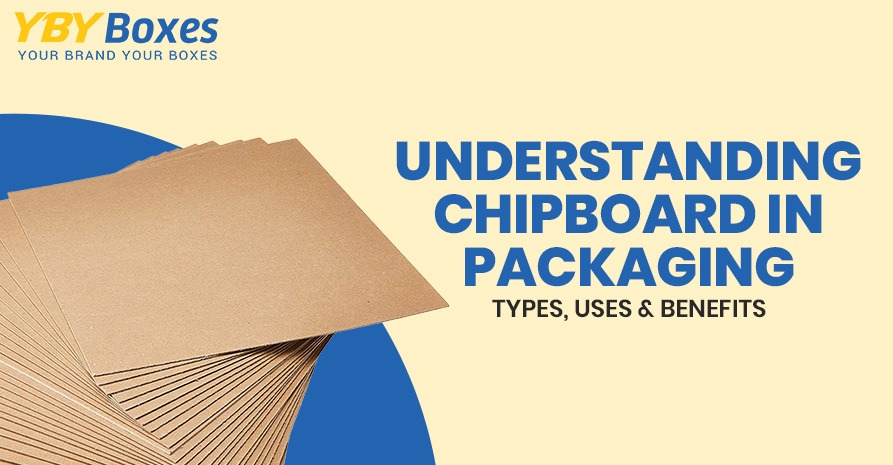
Chipboard in packaging is often overlooked, but surprisingly, it’s a foundational part of packaging. Ever wondered what makes your delicate items affordable and durable? If yes, then chipboard is behind the whole scene.
What is chipboard? It’s a versatile packaging material completely made from wood pulp that offers better durability and strength as compared to paper. They are available in multiple thicknesses that perfectly adapt to diverse applications.
Continue reading to know more about it in the form of types, uses, and benefits.
Chipboard in Packaging
An engineered wood product made up of small wood particles like wooden chips and shells, which are linked using synthetic under high pressure. As a result, the thick and flat board is prepared with a uniform structure.
The panels have no natural particles except one, which is solid wood, providing coherent resistance and surface structure.
Moreover, these panels are made from long sheets that can be easily adapted to different shapes and structures, fulfilling the needs of different products.
The main benefit of this chipboard is its eco-friendliness. But there is one con related to chipboard, and it is its non-durability as compared to plywood in wet conditions.
Different Types of Chipboard
Chipboard packaging comes in different types, and each has its own purpose or function. A few are:
- Solid Bleached Sulfate Chipboard
- Coated Recycled Board
- Specialty Chipboard
- Uncoated Chipboard
Let’s discuss them one by one briefly.
1. Solid Bleached Sulfate Chipboard
SBS chipboard is a premium-grade packaging material, generally made from fibers that are white on both sides. It provides a clean appearance with good printability effects. The best option for high-end or luxury items like cosmetics.
2. Coated Recycled Board
CRB chipboard, by name, suggests it is made from recycled fibers with a coated surface that offers perfect durability. It is the best option to use for cosmetics as well as other industries like food and beverages, etc.
3. Specialty Chipboard
This type of chipboard is used with the help of other finishes or customisations like metallic coatings and textured surfaces, etc. Specialty chipboard is used for custom packaging designs where visual appearance holds utmost importance.
4. Uncoated Chipboard
Uncoated chipboard is less commonly used and also less expensive, but it does not provide better moisture-resistant features. Brands use it for the inner side packaging and also for structural components.
Where are Chipboards Used in Packaging?
In the packaging industry, chipboards are used for various functions. You will find it as the backing in notepads, the stiff layer inside cereal boxes, and those handy dividers that keep products separated during shipping.
Retail stores use chipboard constantly for product displays, and those cardboard stands you see near checkout counters. It's also the go-to material for makeup boxes, shoe boxes, and gift packaging because it's sturdy enough to protect what's inside but still easy to print on and customise.
The food and beverage industry loves chipboard, too. Think about pizza boxes, pastry boxes, and those cardboard carriers that hold your coffee cups.
Pharmaceutical companies use it for medicine packaging because it meets safety standards and can be designed with tamper-proof features.
Benefits of Chipboard
Chipboard in packaging comes with both practical and economical benefits, which make it a popular choice for brands. Here are some of the benefits that chipboards offer.
- It’s a budget-friendly option as compared to wood or solid plywood.
- Chipboard is also an eco-friendly packaging solution because it reuses wood waste.
- Easy to cut and use, which makes the production process easier and reduces working time.
- Provides stability and consistency, which reduces deformation or separation over time.
Final Thoughts!
Chipboard in packaging has earned its place as a packaging workhorse for good reason. It strikes that perfect balance between being affordable and actually doing its job well.
Whether you're shipping products across the country or just need something that looks presentable on a store shelf, chipboard handles it without breaking your budget.
What makes chipboard really stand out is how adaptable it is. You can print on it, fold it, cut it into whatever shape you need, and it still holds up under normal use.
Sure, it's not going to replace heavy-duty corrugated cardboard for shipping furniture, but for cosmetics, food items, retail displays, and countless other everyday products, it gets the job done.